

A landmark event for the global transport industry took place in Germany. Deutsche Bahn and Nokia launched the world’s first commercial 5G network at 1900 MHz specifically for railway needs. Why is this project already being called a breakthrough in transport digitalization? What changes await passengers, the industry itself, and operators in the coming years? Let’s look at the key aspects of implementing the latest technologies on Russian railways, development prospects, and the challenges facing the sector.
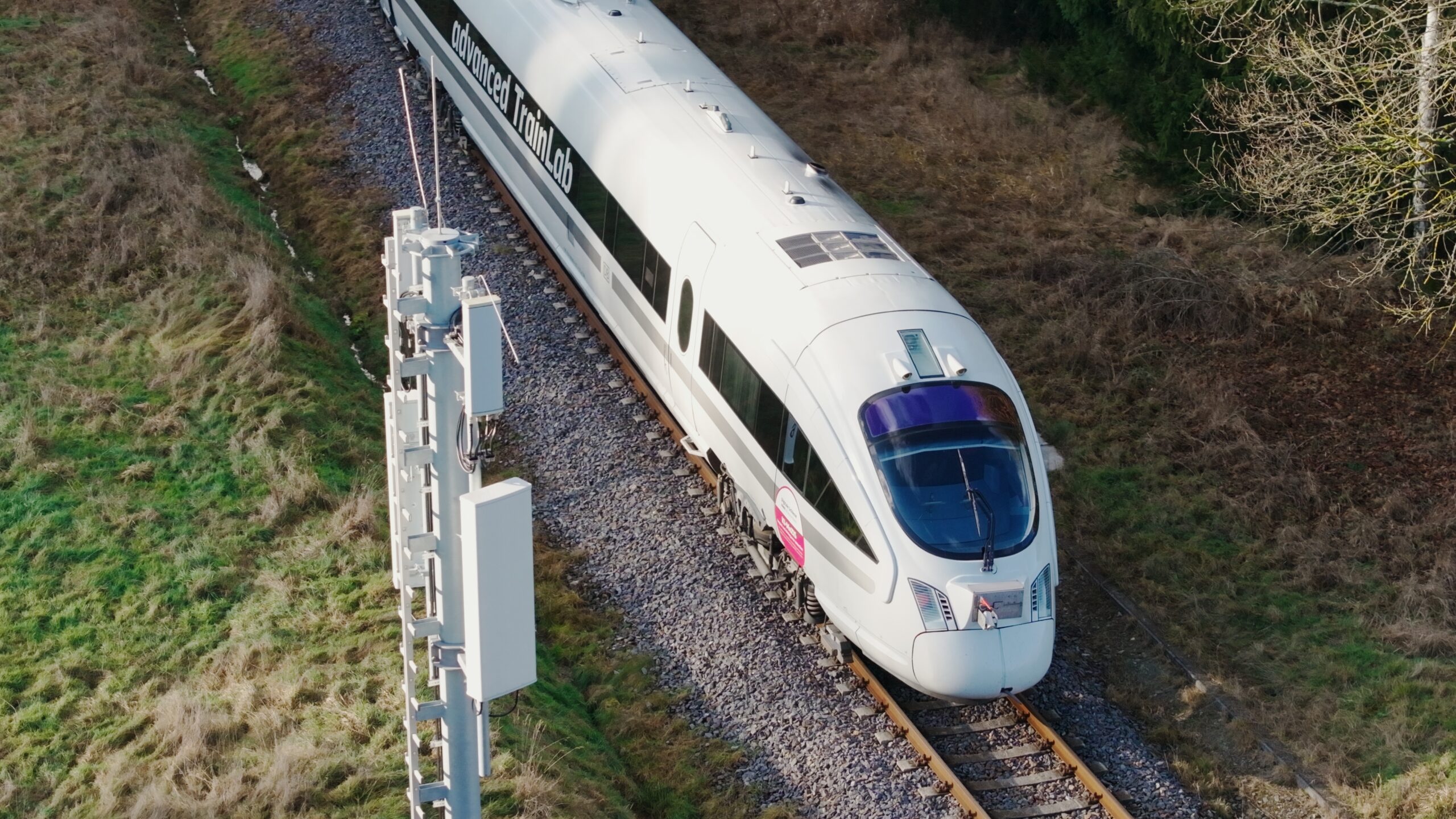
Why the launch of 5G at 1900 MHz became a milestone for European railways
The launch of the first commercial 5G network at 1900 MHz (n101) marks the emergence of an innovative solution for railway communications. Until now, no country had used this band in real-world conditions for transport, where reliability of data transmission is critical.
The choice of the 1900 MHz frequency is not accidental. Deutsche Bahn and Nokia selected this band due to its optimal combination of signal range and bandwidth, meeting the requirements of modern railways. This step fully aligns with the EU’s transport digitalization strategy, which envisions a transition to smart traffic management systems.
The significance of the event is underscored by the fact that European railway companies have long sought a way to replace outdated communication channels with more efficient and secure solutions. The new project paves the way for the widespread adoption of digital services and intelligent infrastructure, which previously remained only a prospect.
What are FRMCS and GSM-R: why the industry needs a new communication system
Previously, European railways relied on the GSM-R platform (Global System for Mobile Communications for Railway). This system was built on standard second-generation (2G) mobile networks and was implemented back in the late 1990s. At that time, GSM-R provided stable voice and limited data transmission between the train and dispatchers, which improved the safety and efficiency of transportation.
However, the growth of digital services, automation, and the emergence of new requirements for speed and data volume have highlighted the limitations of GSM-R. The system cannot cope with the need to support driverless trains or modern multimedia services.
FRMCS (Future Railway Mobile Communication System) is a new standard for railway communications being developed based on 5G. Its goal is to provide safe, fast, and flexible interaction between all objects on the railway line, including automated trains and intelligent infrastructure. The introduction of FRMCS will allow railways to move to a fundamentally new level of digitalization.
Technical features and innovations of Deutsche Bahn’s new 5G network
As part of the pilot project, Deutsche Bahn uses a 5G Standalone (SA) Core architecture. This solution differs from its predecessors in that it does not need to rely on previous generation networks such as LTE. The entire system is built around the 5G core, which ensures maximum performance and minimal data transmission delays.
The Standalone (SA) technology enables functions that were previously impossible. These include:
- Full automation of train traffic management in real time
- Built-in fault tolerance and self-recovery of network elements in case of failures
- Continuous monitoring of equipment and infrastructure status
For example, when a fault is detected on the line, sensors automatically send a signal to the central system, where a decision is made in fractions of a second. This reduces downtime and risks for passengers.
Benefits for Deutsche Bahn, passengers, and operators
For Deutsche Bahn, the implementation of the new network means a breakthrough in automation: now it is possible to remotely control trains, conduct real-time monitoring of infrastructure status, and respond quickly to emergencies.
Passengers receive new levels of safety thanks to instant data exchange between trains and control centers. Additional digital services—Wi-Fi, multimedia platforms, digital tickets—can become standard on most routes. In addition, the reliability of transportation increases: trips become less susceptible to delays due to technical problems.
Operators will receive new tools for optimizing schedules, maintenance, and logistics, which will lead to reduced operational costs and increased business efficiency.
Why high-quality internet on trains is so important
Today’s passengers want more comfort from their journeys—this concerns not only the service from the railway company, but also access to their usual activities. Most Germans today actively use smartphones, especially the younger generation. So as not to get bored even on a short trip, they can scroll through social networks or watch videos. Mobile games with short sessions, which can be stopped at any moment, are also popular.
Online casino games are also quite popular among Germans. Most Germans prefer mobile platforms, so high-quality mobile internet is fundamentally important. The high prevalence of online casinos is associated with a number of factors, from a wide range of gambling games to marketing strategy.
Today, gaming platforms actively offer bonus incentives. According to a number of verified sources, including information that can be found if you click here, one of the current incentive methods is no deposit bonuses. They show a high level of effectiveness, and accordingly, the number of people for whom high-quality, uninterrupted internet is important is growing. This applies not only to home, but also to mobile networks—including those operating on trains.
How the project fits into the transport digitalization strategy
The launch of the new 5G network is dedicated to Germany’s participation in the European FP2-MORANE-2 project. This initiative aims to accelerate the transition to digital railways across Europe. Germany became a pilot site thanks to the high safety standards and technical equipment of its network, as well as close cooperation between the state and business.
Experts note that the successful experience of implementing 5G at 1900 MHz in Germany provides valuable information for scaling up the project in other EU countries. This concerns not only technical aspects, but also issues of regulation, staff training, and interaction with technology suppliers.
Challenges, limitations, and prospects for implementing 5G in the railway sector
The transition to 5G is associated with a number of technical and organizational complexities. Experts point to the need to standardize data exchange protocols, ensure network cybersecurity, and make new equipment compatible with old systems.
Additional investment and time will be required for staff training, developing new regulations, and resolving frequency licensing issues. According to estimates by Nokia and European regulators, widespread implementation of FRMCS may take 5 to 10 years, and the risks of failures during the transition phase require constant monitoring.
Real-world examples and analogues of 5G implementation in the transport sector
Pilot 5G projects are already being implemented in the railway sector in the UK, France, and China. For example, on some London Underground lines, wireless communication is being tested for automatic train control. In ports and logistics terminals, 5G helps automate loading and unloading.
For comparison: the transition to 5G is like a leap from old dial-up internet to modern broadband in everyday life. New opportunities arise not only in speed, but also in service quality.
What will change for passengers and operators in a few years
The development of 5G and FRMCS promises the emergence of new digital services: from intelligent schedules taking into account traffic and weather conditions, to fully automated stations and personalized services for passengers.
Operators will be able to use big data to build new business models and optimize railway operations. Passengers will benefit from more reliable, safer, and faster transportation.
The introduction of the world’s first commercial 5G network at 1900 MHz for railways marks the beginning of a new era of digitalization in the transport industry. How quickly European countries will be able to scale up this experience and what will change in the lives of millions of passengers are questions that will determine the development of the sector in the coming decade.